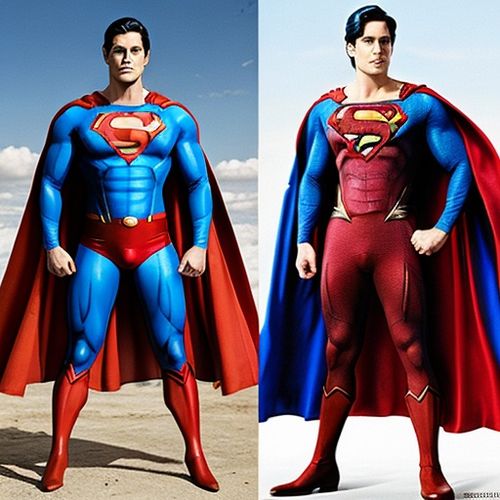
Since Christopher Reeve first donned the iconic blue and red costume in the 1978 film adaptation of **Superman**, the superhero's uniform has become a symbol of hope, strength, and timeless style. The electric blue lycra bodysuit, paired with a flowing red cape and the unmistakable "S" logo, has transcended the pages of comic books to become a cultural phenomenon. As Whoopi Goldberg humorously noted in the documentary **"Super/Man: The Christopher Reeve Story"**, even she was smitten by Reeve's portrayal, admitting, "I don’t think I was lustful like that, until I saw him in that little outfit."
Over the decades, Superman's costume has remained remarkably consistent, a stark contrast to other superheroes like Batman, who has evolved from a sleek, tight-fitting suit to a darker, more militant body armor. While variations in the shade of blue have appeared—from periwinkle to cobalt and even the indigo-washed costume worn by Dean Cain in the 1990s TV show **"Lois & Clark"**—the core elements of the uniform remain instantly recognizable across generations.
This consistency is a testament to the enduring appeal of Superman's design. In a world where fashion trends come and go, the superhero's outfit has become a timeless icon. There is only one notable exception: Zack Snyder's 2013 film **"Man of Steel"**, in which Superman's suit was reimagined without the iconic red trunks. Costume designer Michael Wilkinson explained that this design was "grounded in the culture of his home planet, Krypton," drawing inspiration from the scale-like armor and muscular physiques of the Kryptonian race. "We drew many versions of the suit—one day we did (one) without the trunks and it seemed to be the best fit for our vision," Wilkinson said.
For James Gunn, director of the upcoming **Superman** remake, the return to the classic design was a deliberate choice. "He wants to be a symbol of hope and positivity. So he dresses like a professional wrestler," Gunn explained in an interview with **CinemaBlend**. "He dresses in a way that makes people unafraid of him." The primary-colored suit, with its cheerful and approachable design, serves as a beacon of hope and inspiration, resonating with fans across generations.
But Superman's influence extends far beyond the realm of comic books and cinema. The superhero's iconic costume has also inspired fashion designers, who have long been captivated by its bold colors and distinctive logo. In 2008, New York's Metropolitan Museum of Art's Costume Institute staged an exhibition titled **"Fashion and Fantasy"**, showcasing over 60 ensembles that blurred the lines between superhero costumes and haute couture. One standout piece was a royal blue dress by German designer Bernhard Willhelm, emblazoned with a dripping, blood-red "S" logo. The exhibit's curator, Andrew Bolton, noted that "superhero imagery has suffused almost every aspect of popular culture," highlighting the costume's "inherent metaphorical malleability" that fuels its fascination with both fashion and identity.
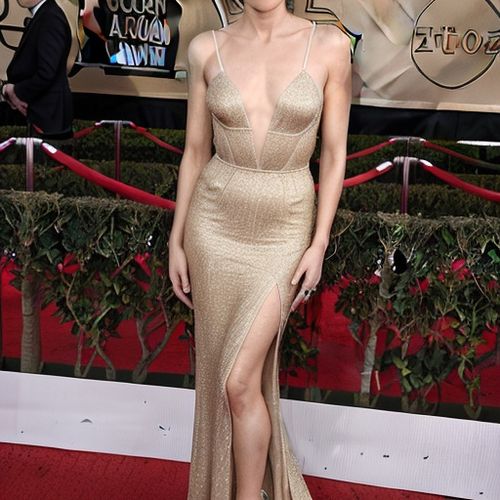
In 2011, American designer Jeremy Scott paid homage to Superman with a royal blue sequined maxi dress for Moschino's Fall-Winter collection. The dress featured a reimagined "S" logo, replaced with a question mark, and a flowing red tulle cape. Scott's playful take on the classic design encapsulated the spirit of fun and creativity that defines modern fashion. "You should have fun with fashion," Scott told **Vogue** at the time, emphasizing the importance of pushing boundaries and embracing whimsy.
The following year, Chanel took inspiration from Superman's crystalline lair, the Fortress of Solitude, for its Fall-Winter 2012 runway show. Models walked through a futuristic landscape of giant geodes, while the iconic chevron logo made its way onto high-fashion designs. The Superman "S" had become more than just a symbol of heroism; it had evolved into a versatile emblem that could be reinterpreted in countless ways.
By the 1990s and 2000s, the Superman "S" had permeated popular culture, becoming an ironic uniform for musicians and creatives. Smashing Pumpkins frontman Billy Corgan wore a black sweater adorned with the emblem in pink and yellow to a 1993 show in Chicago, while Eminem created his own version of the logo in 2002. These adaptations, often infused with a sense of humor or subversion, demonstrated the logo's ability to transcend its original context and become a symbol of artistic expression.
Costume designer Michael Wilkinson, who worked on **"Man of Steel"**, observed that the Superman suit has a unique resonance, inspiring countless reinterpretations. "So many people have taken the suit and given it their own spin, used it to help tell their own story from their own perspective—whether it’s reverential, ironic, or somewhere in-between," he said. The suit's enduring appeal lies in its ability to evoke discussions about ideals and perfection, concepts that have fascinated artists for centuries.
Today, the influence of superhero fashion continues to grow. Last summer, Marc Jacobs re-released an updated version of a classic "S" emblazoned cashmere sweater, originally designed in the late 1990s. The modernized pullover, made in collaboration with streetwear designer Nigo, was spotted among guests at London Fashion Week. Similarly, vintage-inspired Superman T-shirts made appearances at the Fall-Winter 2024 Coach show in New York Fashion Week. The superhero's iconic logo has become a staple in the fashion world, symbolizing both nostalgia and innovation.
As we look to the future, with James Gunn's upcoming **Superman** film on the horizon, the legacy of the Man of Steel continues to inspire. The classic costume, with its bold colors and unmistakable logo, remains a symbol of hope, strength, and timeless style. From the silver screen to the catwalk, Superman's influence shows no signs of waning. Whether worn by a superhero or a fashionista, the "S" logo continues to captivate audiences, proving that even in an ever-changing world, some symbols truly stand the test of time.
By David Anderson/Apr 3, 2025

By Samuel Cooper/Apr 3, 2025
By Eric Ward/Apr 3, 2025
By Amanda Phillips/Apr 3, 2025
By Amanda Phillips/Apr 3, 2025
By Sophia Lewis/Apr 3, 2025
By George Bailey/Apr 3, 2025
By Sophia Lewis/Apr 3, 2025
By Laura Wilson/Apr 3, 2025
By Emily Johnson/Apr 3, 2025
By Jessica Lee/Feb 26, 2025
By Sarah Davis/Feb 26, 2025

By James Moore/Feb 26, 2025
By Noah Bell/Feb 26, 2025
By Noah Bell/Feb 26, 2025
By Daniel Scott/Feb 26, 2025
By Ryan Martin/Feb 26, 2025
By Victoria Gonzalez/Feb 26, 2025
By Benjamin Evans/Feb 26, 2025
By Lily Simpson/Feb 26, 2025