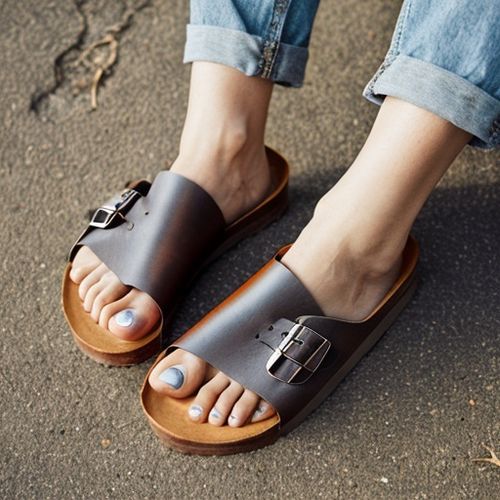
In the realm of fashion, few items are as polarizing yet universally recognized as Birkenstocks. These iconic sandals, with their wide straps and distinctive buckles, have become a symbol of comfort and practicality. They are the epitome of German design—functional, durable, and often beloved for their ability to support the feet through long days of walking. But can these humble sandals truly be considered art? This question, which might seem trivial to some, has sparked a legal battle that reached Germany's highest court, ultimately leading to a ruling that has broader implications for the intersection of design, culture, and intellectual property.
Birkenstock, a name synonymous with quality and tradition, traces its shoemaking heritage back to 1774. Headquartered in Linz am Rhein, Germany, the company has built its reputation on crafting footwear that combines comfort with a distinctive aesthetic. The wide-strapped, big-buckled sandals have become a cultural icon, worn by everyone from beachgoers to fashionistas. Their appeal lies in their ability to straddle the line between practicality and style, often looking chic in the right setting but equally at home in more casual environments.
However, the question of whether Birkenstocks can be considered "works of applied art" is not merely a matter of semantics. Under German law, works of art enjoy stronger and longer-lasting intellectual property protections than ordinary consumer products. This distinction is crucial for companies like Birkenstock, which seek to protect their designs from imitation and preserve their brand's unique identity.
In a bold move, Birkenstock filed a lawsuit against three competitors who were selling sandals strikingly similar to their own. The company argued that its sandals are not just footwear but "copyright-protected works of applied art" that should not be replicated. The stakes were high: if successful, Birkenstock could have obtained an injunction to stop its competitors from producing copycat designs and even forced them to recall and destroy existing products already on the market.
The legal journey was far from straightforward. Before reaching Germany's Federal Court of Justice, the case had been heard in two lower courts, with each offering conflicting opinions. A regional court in Cologne initially sided with Birkenstock, recognizing the sandals as works of applied art and granting the requested orders. However, Cologne's higher regional court overturned this decision on appeal, stating that it could not identify any artistic achievement in the design of the wide-strapped, big-buckled sandals.
The Federal Court of Justice ultimately sided with the appeals court, dismissing Birkenstock's case. In its ruling, the court stated that a product cannot be copyrighted if "technical requirements, rules, or other constraints determine the design." The court emphasized that for copyright protection, the level of design must be sufficiently high to reveal individuality. In other words, the design must go beyond mere functionality and demonstrate a unique artistic expression.
This decision has significant implications for the world of design and intellectual property. It underscores the delicate balance between protecting innovation and allowing competition in the marketplace. Birkenstock's argument that its sandals are works of art reflects a broader trend in the fashion industry, where companies increasingly seek to protect their designs through copyright law. However, the court's ruling highlights the challenges of distinguishing between functional design and true artistic expression.
The case also raises important questions about the nature of cultural icons. Birkenstocks, with their wide straps and distinctive buckles, have become a symbol of German design and practicality. Their ubiquity in summer fashion, from beach towns to urban streets, has solidified their place in popular culture. Yet, the court's decision suggests that cultural significance alone is not enough to qualify a product as a work of art.
In a world where fashion and design are increasingly intertwined, the line between functional products and artistic creations can be blurry. Birkenstock's sandals, with their simple yet iconic design, exemplify this tension. While they may be beloved for their comfort and cultural resonance, the court's ruling indicates that they do not meet the threshold for artistic protection under German law.
The debate over whether Birkenstocks can be considered art is not just a legal matter; it is also a cultural one. For many, these sandals represent more than just footwear—they symbolize a certain lifestyle, a commitment to comfort, and a nod to tradition. Their wide straps and distinctive buckles have become a visual shorthand for practicality and style, making them instantly recognizable across the globe.
However, the court's decision also serves as a reminder that the world of intellectual property is complex and often subject to interpretation. What one person sees as a work of art, another might view as a functional product. The Federal Court of Justice's ruling that Birkenstocks are "just comfy footwear" reflects this tension and highlights the challenges of defining art in a legal context.
In conclusion, the Birkenstock case is a fascinating exploration of the intersection of comfort, culture, and copyright. It raises important questions about the nature of artistic expression and the limits of intellectual property protection. While the court's decision may have disappointed Birkenstock, it also offers valuable insights into the ongoing debate over what constitutes art in the modern world.
As we continue to navigate the complex relationship between design, culture, and law, the story of Birkenstocks serves as a reminder that even the most iconic products can face scrutiny. Whether viewed as a symbol of German craftsmanship or simply as a pair of comfortable sandals, Birkenstocks will undoubtedly remain a part of our cultural landscape. Their journey through the courts, however, has added a new dimension to their story—one that highlights the enduring challenges of defining art and protecting creativity in an ever-changing world.
By David Anderson/Apr 3, 2025

By Samuel Cooper/Apr 3, 2025

By Eric Ward/Apr 3, 2025

By Amanda Phillips/Apr 3, 2025

By Amanda Phillips/Apr 3, 2025

By Sophia Lewis/Apr 3, 2025

By George Bailey/Apr 3, 2025

By Sophia Lewis/Apr 3, 2025
By Laura Wilson/Apr 3, 2025

By Emily Johnson/Apr 3, 2025

By Jessica Lee/Feb 26, 2025

By Sarah Davis/Feb 26, 2025

By James Moore/Feb 26, 2025

By Noah Bell/Feb 26, 2025

By Noah Bell/Feb 26, 2025
By Daniel Scott/Feb 26, 2025

By Ryan Martin/Feb 26, 2025

By Victoria Gonzalez/Feb 26, 2025

By Benjamin Evans/Feb 26, 2025

By Lily Simpson/Feb 26, 2025